
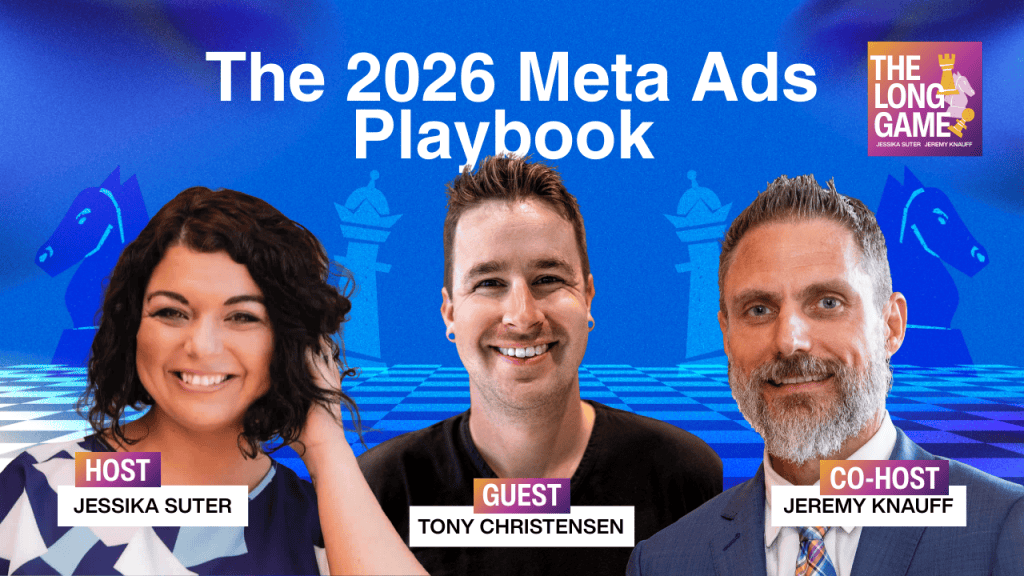
If you run ads, manage marketing, or even just try to keep up with digital marketing news, you already know how quickly things evolve. One minute you think you’ve figured out the system and the next minute Meta releases another update, another feature, or another algorithm change that makes everyone question everything again.
So we brought Tony on the show to help break it all down and answer the questions business owners and marketers are asking right now.
We joined the show a few minutes early to connect and prepare before going live because there was so much to unpack this honestly could have been a three or four part series. What followed was a practical conversation about where Meta Ads are heading and how businesses can adapt without getting overwhelmed. Because let’s be honest, Meta is always changing the rules of the game.
Tony Christensen is not just a co-founder of Brick Social, he’s the driving force behind campaigns that stop the scroll and drive sales. Known for his razor-sharp creative strategies and unrelenting focus on results, Tony has mastered the art of turning brands into household names.
E-commerce brands trust Tony because he doesn’t just create ads—he crafts emotional connections, delivering messages that resonate with audiences and inspire action. With a proven track record of helping businesses scale to million-dollar months, Tony is the secret weapon brands need to stand out in the crowded digital space.
Let’s dive into the biggest takeaways from the conversation.
So Tony… What’s the State of Meta Ads in 2026
One of the first questions we asked Tony was simple.
If you had to summarize the state of Meta Ads in one sentence for 2026, what would you say?
His answer basically came down to this. Meta is becoming more automated and more powered by AI than ever before. The advertisers who win are the ones who feed the system great creative and great data.
In other words, the days of trying to outsmart the algorithm with complicated targeting tricks are fading. The algorithm is now doing most of that work itself.
What Changed in the Last 12 to 18 Months
Tony explained that a lot of advertisers are still operating like it is 2022.
But the last year and a half has brought some major changes. Meta has leaned heavily into AI driven campaign automation through tools like Advantage Plus and newer machine learning models such as the Andromeda algorithm.
That means the platform is doing more of the heavy lifting when it comes to finding the right audience. Instead of building complicated targeting stacks, marketers now need to focus more on the inputs they control.
- The message.
- The creative.
- The offer.
Because if the creative is weak, the algorithm has nothing good to work with.
Are Meta Ads Still Worth It for Smaller Businesses
Tony’s answer was a clear yes.
The platform still works extremely well for businesses that understand their audience and are willing to test creative. In fact, smaller brands often have an advantage because they can move faster and create more authentic content.
Large companies tend to over polish their advertising. Smaller companies can show the real humans behind the brand and that tends to perform very well.
Let’s Talk Creative Because That’s Where the Magic Is Happening
Tony confirmed what many marketers are seeing right now. Authentic content is consistently outperforming highly polished brand ads.
User generated style content, behind the scenes videos, and simple talking head videos are often beating expensive commercial style ads.
Short form vertical video continues to dominate, especially in Reels placements. But carousels still work extremely well when they tell a story across multiple frames.
The key is that the content needs to feel natural inside the feed.
If an ad looks like an obvious advertisement, people scroll right past it. If it feels like a normal post, people stop and watch.
Should Founders Be the Face of Their Ads
Tony believes founders and leaders inside a company should absolutely be part of their advertising strategy whenever possible.
Why?
Because people trust people far more than they trust logos.
When a founder shares the story behind the company, talks about why they built the product, or simply shows up as the human behind the brand, it builds trust faster than almost anything else.
It also aligns perfectly with relationship marketing. When people feel connected to the person behind the business, they are far more likely to become long term customers and advocates.
Targeting Is Getting Simpler
One of the myths Tony busted during the conversation is the idea that complicated targeting equals better results.
In reality, many advertisers are overthinking their targeting strategies.
With Meta’s current AI capabilities, broad targeting often works better. The algorithm is incredibly good at finding the right people as long as it has enough data and strong creative to work with.
Instead of spending hours building complex audiences, marketers should spend that time testing different messaging and creative approaches.
How Much Control Should Marketers Give the Algorithm
Of course this raises another question.
If Meta is doing more of the optimization, how much control should marketers actually give the system?
Tony’s answer was that automation is incredibly powerful, but strategy still belongs to humans.
Meta can optimize delivery, placements, and audience matching very well. But humans still need to guide the overall strategy, messaging, and creative testing.
Think of it less like giving up control and more like working alongside the machine.
Measurement and ROI Are Changing Too
Another topic we discussed was attribution.
Tracking has become more complicated over the last few years thanks to privacy updates and changes to third party data.
Tony explained that marketers need to shift how they evaluate performance.
Instead of obsessing over platform specific attribution, businesses should focus more on overall business results.
- Revenue growth.
- Customer acquisition costs.
- Lifetime value.
Those metrics tell a much more accurate story than clicks or impressions.
He also talked about the difference between demand capture and demand creation.
Search platforms are great at capturing existing demand. Meta is often stronger at creating demand by introducing people to brands through storytelling and discovery.
The Biggest Budget Burning Mistake
When we asked Tony what the biggest mistake businesses make with Meta Ads is, his answer was immediate.
Running ads before their message is clear.
If the offer is confusing or the creative is weak, no targeting strategy or budget will fix it.
Strong ads start with strong positioning.
That is why organic content and paid advertising work best together. Organic content helps you learn what resonates. Paid ads help you scale what is already working.
Where Meta Is Headed
Looking ahead, Tony believes Meta will continue moving toward AI driven optimization.
Creative will become even more important than targeting because the algorithm will increasingly handle audience matching automatically.
First party data will also become more valuable over time. Businesses that build email lists, communities, and direct relationships with their audiences will have stronger signals to feed into their campaigns.
In many ways, paid advertising and community building are starting to merge.
If You Were Starting Over Today
To wrap up the conversation we asked Tony what he would do if he were starting an ad strategy from scratch today.
His answer was refreshingly simple.
- Spend the first ninety days doing three things.
- Create strong content that clearly tells your brand story.
- Post consistently to see what messaging resonates with your audience.
- Then run ads to amplify the content that already performs well organically.
- At the same time, stop chasing every new tactic and focus on consistent experimentation.
Final Advice for Marketers
Before we wrapped the show, we asked Tony for one final piece of advice for marketers who feel overwhelmed by all the changes.
Tony:
Focus on the fundamentals.
- Clear messaging.
- Great creative.
- Real human connection.
Technology will keep evolving, but those principles will always win.
And if there was one theme that came through the entire conversation, it was this.
Marketing is changing fast, but the brands that build trust, show up authentically, and focus on relationships are the ones that will continue to win the long game.
If you’d like more information about Tony and where to connect, please visit him here.