
Websites are no longer digital brochures.
In 2026, they are trust builders, discovery engines, and often the very first place someone decides whether they believe you, understand you, and want to move forward with you.
That’s exactly what we unpacked on The Long Game in our conversation about what’s actually working on websites right now and why so many businesses feel like their site looks “fine” but still isn’t converting, ranking, or building momentum.
The short version?
Winning at web in 2026 has less to do with chasing algorithms and more to do with clarity, credibility, and connection.
Let’s break that down.
The Biggest Misconception About Websites Right Now
One of the biggest misconceptions we see is that discoverability is still about traffic volume.
It’s not.
Discoverability today is about being understood, being trusted, and showing up in the moments that matter most. AI-powered search, fewer clicks, and higher intent mean your website’s job has shifted.
Your site is no longer just trying to attract people. It’s there to confirm trust.
Do I trust this brand enough to take the next step?
Why Websites Still Matter in an AI-Driven World
With AI, social platforms, and search behavior evolving rapidly, it’s fair to ask why websites still matter.
They matter because your website is the only platform you fully own. It’s your homebase.
- Social platforms change
- AI summaries evolve
- Search results fluctuate
Your website remains your home base. It’s where trust is either reinforced or broken.
We’re seeing fewer clicks overall, but those clicks are higher intent. That means when someone arrives on your site, they’re deciding quickly if you’re credible, clear, and human.
If your site feels confusing, generic, outdated, or overly automated, people bounce. Not because your offer is bad, but because trust wasn’t established fast enough.
What’s Actually Working on Websites Right Now
Clear Structure and Real Language
Websites that win are easy to scan, easy to understand, and written the way real people talk. Human language now outperforms keyword stuffing, especially in AI-driven search. Clarity beats cleverness every time.
Trust Signals Before Sales Language
Testimonials, real photos, real stories, media mentions, and proof points matter more than polished taglines.
People don’t want hype. They want reassurance.
Websites That Support Relationships
The most effective websites don’t just sell. They support connection, education, and ongoing engagement.
This is where great client examples stand out.
Our Own Client Examples Doing Web Right in 2026
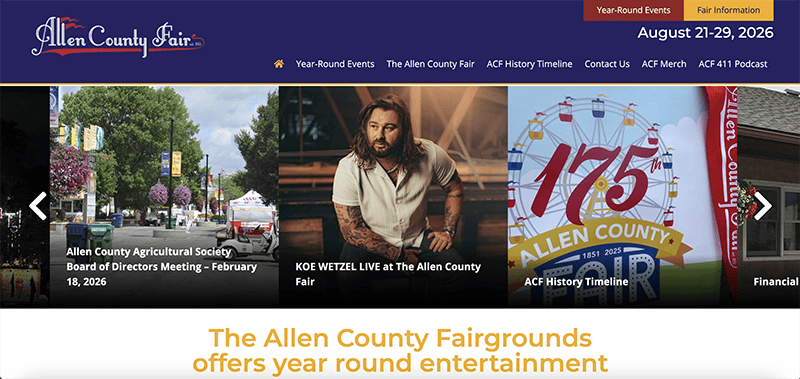
The Fair’s website isn’t just about dates and ticket sales. It serves as a hub for community connection, event discovery, and real-time updates and showcases their long-standing history within our community. It reflects the experience people expect when they show up in person, which builds trust before anyone even walks through the gate.
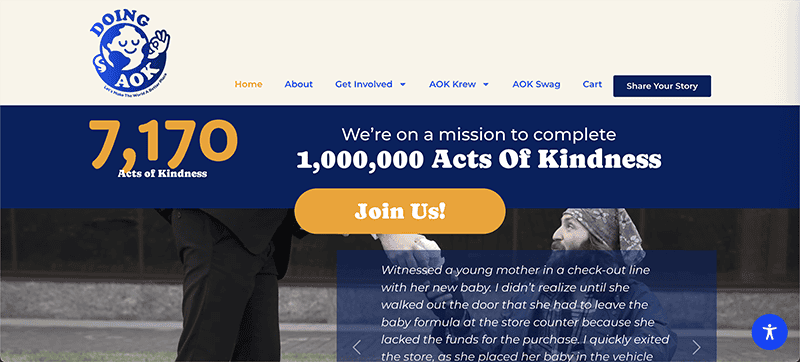
Doing AOK’s site focuses on mission first, action second. The clarity of purpose, storytelling, and community-driven messaging make it easy for visitors to understand what the movement is about and how to participate in Doing Acts of Kindness. That alignment fuels discoverability through meaning and local community activation.
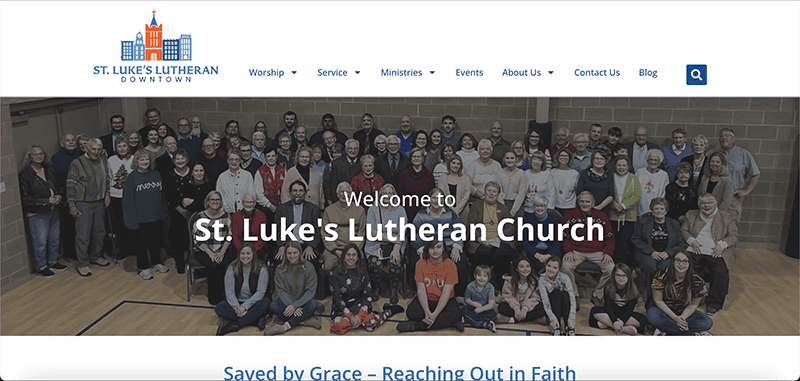
St. Luke’s integrates live-streamed church services directly into their website. That simple decision removes friction, increases accessibility, and builds connection for people who may not be ready to walk through the doors yet. It’s a perfect example of how websites can serve real humans in real moments.
Why Trust Comes Before Traffic
- They don’t want to guess.
- They don’t want to decode your brand.
- They want to feel confident quickly.
That’s why structure, speed, accessibility, and clarity matter so much. A slow site, confusing navigation, or vague messaging creates friction. And friction kills trust.
Accessibility also plays a bigger role than ever. Sites that are easier to use for everyone aren’t just compliant, they’re more discoverable and more credible.
Why Trust Comes Before Traffic
- Too many pages.
- Too many messages.
- Too many calls to action.
AI-powered search rewards focus. Websites that clearly answer real questions perform better than sites trying to rank for everything.
If you haven’t updated your website in the last two years, you’re likely missing:
- Updated structure for AI discoverability
- Clear positioning language
- Modern trust signals
- Accessibility considerations
- Alignment with how people actually search and choose today
One Thing to Stop, Start, and Simplify
- Stop writing for algorithms instead of humans
- Start answering real questions your audience actually asks
- Simplify your messaging so someone understands what you do in five seconds or less
If You’re Rebuilding or Refreshing Your Site
Prioritize this order:
- Clarity of message
- Credibility and proof
- Human language and tone
- Structure and accessibility
- Design that supports trust, not distraction
- Design should amplify clarity, not compete with it.
Winning at Web Is About Connection
Winning at web in 2026 isn’t about hacking search engines.
It’s about showing up clearly, consistently, and credibly wherever people encounter your brand and making sure your website confirms what they already hope is true about you.
After this conversation, the biggest encouragement is simple: Look at your website less as a marketing asset and more as a relationship tool. Because in a world powered by AI, human connection is still the advantage.
If you’re looking for the real way to Out-CARE the competition we have a free guide to do just that,